

About our organization
What we do?
The Polish Educational Society is a charitable organisation which has been supporting Polish education in Great Britain for almost 70 years.
Our main core activity is the support of Polish Language Saturday Schools.
The aim of the organisation is to support the setting up and running of supplementary schools delivering ‘mother tongue subjects’: advice in how to set up a school, practical help with managing the school, activities to help raise teachers’ qualifications.
The Polish Educational Society also runs an Examination Centre where students are able to sit Polish Language examinations at GCSE and A-level.
Bank transfer details:
Bank: Lloyds
Account holder:
The Polish Educational Society
Account Number: 21132360
Sort code: 30-93-79
We also
- prepare conferences and professional training for teachers.
- run workshops to help prepare students for exams.
- organise a series of events which bring together Polish pupils and students, such as our regular Laxton Hall Fun Day and frequent competitions.
- help facilitate communications between Polish Language Saturday Schools and other organisations.
- run a Bookshop which offers a wide selection of text books and Polish literature.
- gather and collate information about all aspects of teaching ‘mother tongue subjects’ in Great Britain with the aim of supporting all interested parties: parents, students, headteachers, teachers.
Our plans
The present time is a time which has seen a sudden increase in the numbers of children born into Polish families in Great Britain and consequently the numbers of Polish Language Saturday Schools. The Polish Educational Society faces the great challenge of meeting growing demands. We are implementing plans to update functionality of our office by introducing improvements in information technology and communications.
Our constitution
The Polish Educational Society is a charitable organisation registered in England and Wales (charity no 1159980). Please find The Polish Educational Society CIO Constitution. The certified translation of our constitution into Polish can be found here.
Our history
Poland was partitioned in the 18th Century by her three neighbours – Prussia, Austria and Russia. For over 100 years it was not a free country. In that time, Polish patriots felt the need and the duty to ensure that the Polish language and culture were passed on to the new generations.
The Polish Educational Society was born in 1905, when the defeat of Russia in its war with Japan in the Far East resulted in an easing of its occupation of Poland. The Polish Educational Society was formally established on 28th April 1905 by Józef Świątkowski. Its first president was Henryk Sienkiewicz, the Nobel prize-winning Polish writer.
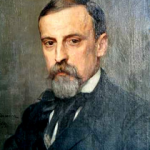
Henryk Sienkiewicz
The organisation continued its activities between the wars in a somewhat different form. According to records from 1925, there were 244 organisations affiliated to the PES in Poland numbering over 18 thousand members in total. The outbreak of World War II brought an end to the Society’s activities in Poland.
Amongst the initiators of the rebirth of the Polish Educational Society in Great Britain was General Władysław Anders, who became the first President of the PES Council.
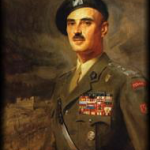
Władysław Anders
The Polish Educational Society Abroad was established in the 1953 and realised the following tasks
- Assisted in the setting up of supplementary schools of the Polish language
- Shaped the framework of today’s Polish Saturday Schools
- organised events such as assemblies, competitions, conferences giving Polish children a sense of belonging to a wider community
- Created and published textbooks and teaching aids, guidance for teachers as well as Polish literature during the times, when bringing them from Poland was not possible
- Published educational magazines for Polish children and youth
- Initiated organising regular conferences and training for teachers and workshop for candidates taking A-level Polish
- Led to the recognition of Polish as one of the GCSE and A-level subjects recognised by British universities amongst their entry criteria
- Set up the PMS Bookshop offering Polish literature, schoolbooks, teaching aids, magazines and handicraft
Should you require any additional information about the PES history, it was written up in two publications (in Polish) that you can get from the PES Bookshop:
- Podhorodecka, A., W służbie oświacie (In the service of eductation), London 2003.
- Podhorodecka, A., Ostatnie dziesięciolecie: Historia Polskiej Macierzy Szkolnej 2003-2013 (The last decade: A history of the Polish Educational Society 2003-2013), London 2013.